
The Whole Pilot® Training Programme
Developed with Airlines, for Airlines.
At Leading Edge Aviation, we believe in more than just training pilots; we believe in ‘The Whole Pilot®’ approach. This industry-leading programme focuses on developing a diverse set of skills that go beyond just technical proficiency.
Developed in close collaboration with our airline and industry partners, this programme reflects the feedback and airline requirements for newly qualified pilots. Its sole purpose is to ensure our student pilots are airline ready and are subsequently in high demand across the industry.

The Whole Pilot® Framework
The Whole Pilot ® framework is based on the modern philosophy that airlines are now prioritising attitude as well as aptitude in their search for entry-level pilots.
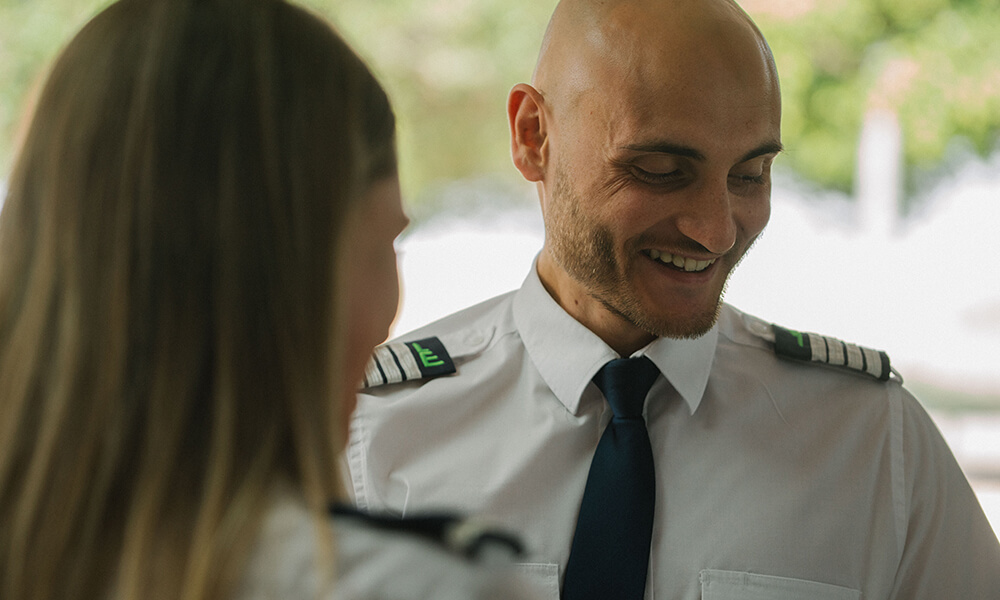
Attitude As well as Aptitude
Just as an aircraft’s performance is determined by its attitude and power settings, a pilot’s development depends on the effort they apply and the mindset they bring to their training.
At Leading Edge Aviation, we recognise that technical skill alone isn’t enough; success in today’s airline industry demands the right attitude, commitment, and resilience. By combining these qualities with focused effort, our students achieve the level of performance that sets them apart.
Our role is to provide the environment, support, and guidance that allow every student to reach their full potential, not only as exceptional pilots, but as future leaders in the flight deck.

The Whole Pilot® Course Delivery
The Whole Pilot® training programme isn’t just a face-to-face teaching course; it is the whole package.
Mental Health and Well-Being
- Commanders Professional Development Course with Emma Henderson
- Gym Discounts
- VLE Material
- Mentoring Programme
- “Health Assured” Telephone Service
- Mental Health First Aiders
Airline Pilot Standards
- Behaviour records (9x PCs)
- Environmental APS-MCC
- Foundation Degree
- World Leading KSA-100
- I Am Safe Checklist
- Extra-Curricular Presentations/Visits
- The Whole Pilot Award

Situational Awareness
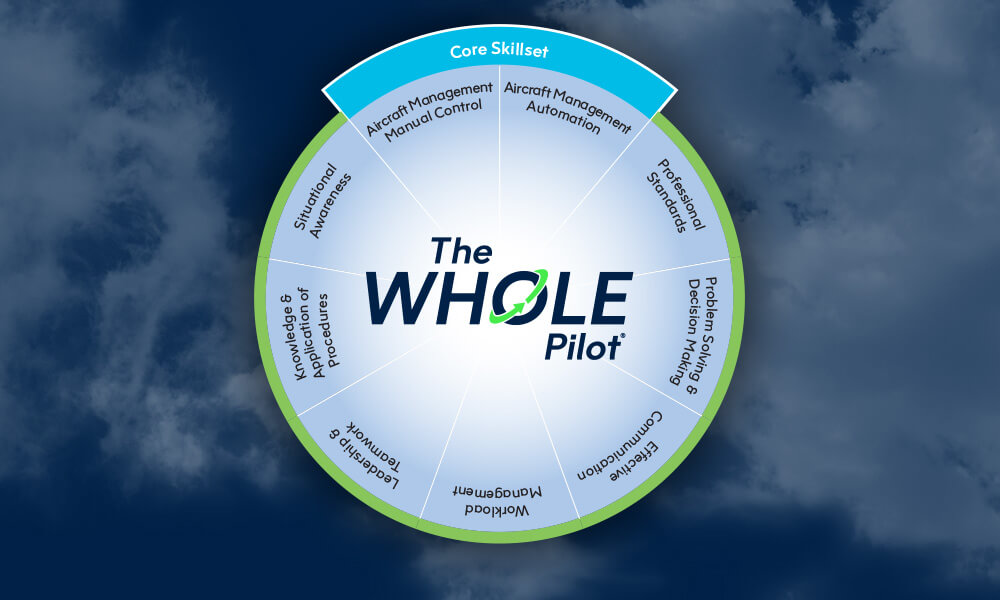
Staying alert to the aircraft’s status, environment, and those involved in the operation. It involves anticipating issues, forward planning, updating mental models, and responding quickly to changes or threats.
Professional Standards
Staying alert to the aircraft’s status, environment, and those involved in the operation. It involves anticipating issues, forward planning, updating mental models, and responding quickly to changes or threats.
Leadership and Teamwork
Motivating and supporting others, encouraging open communication, and ensuring task completion through collaboration. Respecting diverse views, giving and receiving feedback, and handling conflict constructively.
Effective Communication
Clearly exchanging information to ensure shared understanding. Active listening, using standard phrases when needed, confirming messages, and adapting style to suit the situation and audience.
Workload Management
Prioritising tasks, staying calm under pressure, and using all available resources effectively. Recognising overload, managing time wisely, and sharing tasks to maintain performance.
Problem Solving and Decision Making
Identifying issues, evaluating options, and choosing the best course of action. Staying objective, using all available information, managing risk, and reviewing decisions to improve outcomes.
Knowledge and Application of Procedures
Understanding and correctly applying standard operating procedures, regulations, and company policies. Staying current, using procedures appropriately, and adapting while maintaining safety and compliance.
Aircraft Management Manual Control
A pilot’s ability to manage and operate an aircraft using its manual systems and controls.
Aircraft Management Automation
Operating and managing the aircraft’s automated systems, such as autopilot and flight management tools.
Situational Awareness
Staying alert to the aircraft’s status, environment, and those involved in the operation. It involves anticipating issues, forward planning
Professional Standards
Managing the aircraft safely and efficiently while upholding discipline, responsibility, and ethical conduct.
Leadership and Teamwork
Motivating and supporting others, encouraging open communication, and ensuring task completion through collaboration. Respecting diverse views, giving and receiving feedback, and handling conflict constructively.
Effective Communication
Clearly exchanging information to ensure shared understanding. Active listening, using standard phrases when needed, confirming messages, and adapting style to suit the situation and audience.
Workload Management
Prioritising tasks, staying calm under pressure, and using all available resources effectively. Recognising overload, managing time wisely, and sharing tasks to maintain performance.
Problem Solving and Decision Making
Identifying issues, evaluating options, and choosing the best course of action. Staying objective, using all available information, managing risk, and reviewing decisions to improve outcomes.
Knowledge and Application of Procedures
Understanding and correctly applying standard operating procedures, regulations, and company policies. Staying current, using procedures appropriately, and adapting while maintaining safety and compliance.
Aircraft Management Manual Control
A pilot’s ability to manage and operate an aircraft using its manual systems and controls.
Aircraft Management Automation
Operating and managing the aircraft’s automated systems, such as autopilot and flight management tools.
The Commanders’ Professional Development Programme (CPD)
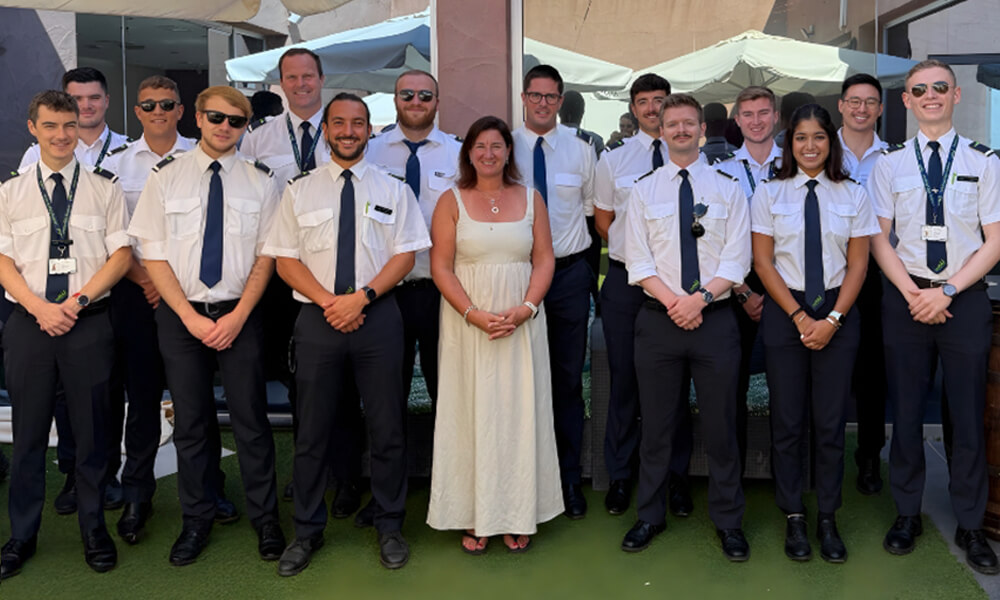
The CPD programme forms a large part of the Whole Pilot ® training programme and is delivered in collaboration with the well-esteemed Captain Emma Henderson MBE.
Each module focuses on a core competency essential to your development as a future Commander. These skills go beyond technical flying ability and provide real-world scenarios that will give you a comprehensive understanding of each competency. Each module will last 90 minutes.
- Module 1: Professional Standards
- Module 2: Effective Communication
- Module 3: Problem Solving and Decision Making
- Module 4: Situational Awareness
- Module 5: Preparation and Adaptability
- Module 6: Integration and Application of Skills
Key Benefits





“Today’s Airline operation demands that pilots have more than just technical flying ability. They need to be commercially aware, effective Managers, clear communicators, problem solvers and decision makers. That is exactly what “The Whole Pilot ® ” programme does for the pilots that join us as First Officers."